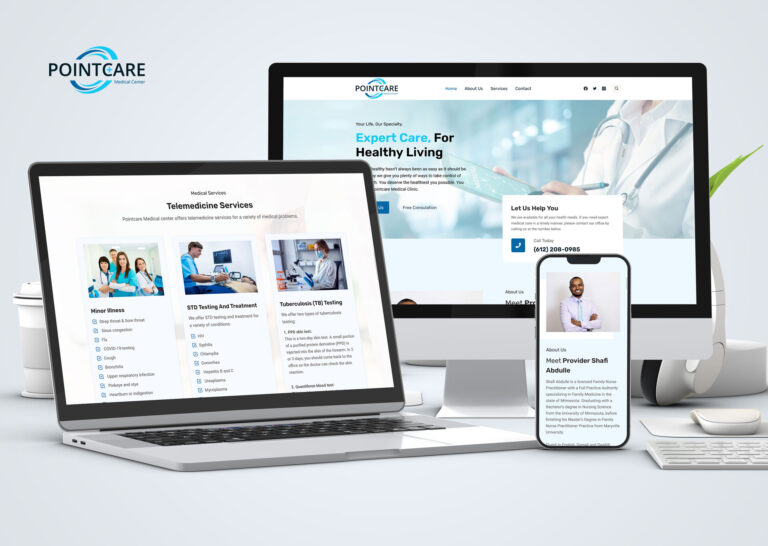
How to Make a Healthcare Website More Engaging?
Beyond Looks: How to Make a Healthcare Website More Engaging Through UX and Accessibility
There’s a moment that happens in every healthcare organization we work with. Someone says, “Our website looks great,” and then, quietly, someone else asks, “How can we make a healthcare website more engaging?”
At C7 Healthcare, we’ve seen this story play out more than once. The design is polished, the colors feel calm and clinical, and the photos are professional. Yet patients bounce within seconds, appointment booking rates lag, and even the most informative health information gets lost. It’s not that the website looks bad; it’s that it’s not engaging.
And that word, “engaging,” is tricky. It’s not about flashy graphics or trendy animations. Engagement in healthcare web design means accessibility, usability, empathy, and trust; all wrapped in an experience that feels easy and human.
So let’s talk about what that really means, beyond surface-level design.
The Real Work of UX in Healthcare Websites
UX, or user experience, is often mistaken for aesthetics. But in healthcare, UX is really about behavior: how patients find, understand, and act on health information.
Think of a patient searching online for treatment options. Maybe they’re anxious, maybe they’re comparing clinics, maybe they’re not sure what “responsive design” even means. If your website feels overwhelming or inaccessible, they leave. If it feels intuitive—if navigation, colors, content, and interactions align with how real people think—they stay.
That’s the difference between design that looks good and design that works.
At C7 Healthcare, we focus on UX strategies that put patient experience at the center:
- Simple appointment booking functionality that reduces friction.
- Patient portals that integrate with clinical systems but still feel approachable.
- Clear, scannable content that balances medical accuracy with readability (yes, we test it with tools like the Flesch-Kincaid Readability Tool).
Because when patients can find what they need without frustration, engagement follows naturally.
How to Make a Healthcare Website More Engaging
Accessibility as the Starting Point
Every healthcare website should start with accessibility. Not as an afterthought, but as a core design principle.
The truth is, accessibility isn’t just for users with disabilities; it’s for everyone. High-contrast text helps users reading on mobile screens in sunlight. Alt text helps when images don’t load. Keyboard navigation helps users with mobility challenges, but also anyone with a broken mouse.
We design websites that ensure every button, color, and piece of text supports inclusivity. That might sound technical, but it’s really about empathy.
Wesbite accessibility features go hand in hand with trust. If your healthcare website design welcomes everyone, it communicates something deeper: this practice pays attention. It cares.
And that message can matter more than any tagline or marketing statement.
Inclusive Design Feels Personal
Inclusive design doesn’t stop at compliance checklists. It’s about designing for diverse audiences, including different ages, languages, literacy levels, and emotional states.
A 65-year-old looking for information about hormone treatment might need large text, simple language, and gentle color contrast. A younger visitor searching for details of treatment choices might prefer interactive content or video content that explains procedures visually.
At C7 Healthcare, we blend both. We use responsive design to make web-based health care content adaptable across generations and devices. And we test content against real patient scenarios, because sometimes a form field label or a confusing menu link can completely break engagement.
Accessibility isn’t decoration, it’s experience design.
Measuring Engagement: What Actually Counts
In healthcare, engagement metrics tell a deeper story than clicks and traffic.
We look for behavioral signals; the things people do when they actually care about your content. Time spent reading an article about rheumatoid arthritis. Scroll depth on a service page about sleeve gastrectomy. Average user ratings on educational videos. Appointment scheduling completions.
These numbers matter more than sheer page views because they reveal the quality of engagement.
If people linger, if they read, if they interact, you’ve built something that resonates. That’s UX doing its job.
It is also worth tracking modes of engagement across channels: email, patient portals, and even social media. Because engagement systems don’t live in isolation anymore. A user who first finds your content on social media might return later for appointment booking or clinical follow-up. That’s all part of the same journey.
Personalization Without Overstepping
Personalization in healthcare web design can be powerful, but it must be ethical and compliant.
We’re not talking about the type of personalization that mines data or crosses privacy lines. Instead, think about contextual personalization:
- Showing local contact info based on city or ZIP code.
- Displaying service highlights relevant to that user’s previous page visit.
- Using smart content blocks to suggest related health information or patient education content.
These are subtle touches that make patients feel recognized without feeling tracked.
We’ve seen this balance make a real difference. A medical practice website in Jacksonville, for example, increased appointment booking conversions by 30% after we added contextual prompts and simplified its appointment scheduling interface.
Small UX changes can quietly transform retention.
Behavioral Triggers and Follow-Up Experiences
One area where healthcare websites lag behind other industries is follow-up. A patient might visit, browse treatments, maybe even start to book, and then disappear.
What happens next?
Smart behavioral triggers can bring them back. For example, gentle email reminders about unfinished forms, follow-up content relevant to their last visit, or even re-targeted social media content showing helpful tips.
The idea isn’t to push, but to support.
Building engagement systems that combine these subtle nudges with genuine value (like follow-up resources, patient portal access, or secure ways to continue care), and crucially integrating these elements into a design that feels intuitive and supportive, rather than intrusive or manipulative.
Engagement doesn’t end when someone leaves your site. That’s often when it really begins.
Visual Engagement: When Design Serves Emotion
Let’s talk about looks for a second. Because yes, design does matter; it just shouldn’t lead the conversation.
A creative medical website design in Jacksonville can be beautiful and functional. The key is to design visuals that evoke reassurance, not distraction.
- Use imagery that reflects real care settings.
- Choose colors that align with the emotion of the medical practice (calm blues for wellness, greens for growth, neutral tones for clinical focus).
- Layer interactive content thoughtfully: buttons that respond, animations that confirm action, forms that feel alive.
Patients notice these things, even subconsciously. When we test prototypes, we often see users pause and say, “This just feels easier.” That’s what engagement looks like in the wild: small moments of relief, of clarity.
Content That Holds Attention
Even the best UX can’t save weak content.
We see too many healthcare websites filled with dense, clinical paragraphs; accurate but unreadable. The irony is that high-quality patient education content doesn’t have to sound complicated to be credible.
At C7 Healthcare, we write and design content for patients first, not providers. That means clear structure, readable tone, and audiovisual content that explains rather than overwhelms.
Original and curated information should be carefully balanced. While many health information websites rely on generated online health content or noncertified websites, trusted sources should be prioritized: peer-reviewed, from HONcode-certified websites when appropriate, and then translated into engaging, accessible language.
It’s about making health information feel human.
Making Content Interactive
Static web-based content doesn’t perform like it used to. People expect movement, feedback, and dialogue.
Interactive content, such as self-assessment tools, treatment comparison charts, and adjunctive decision-making tools, allows patients to explore without pressure.
These tools don’t just inform; they create agency. They invite participation in the decision-making process.
When done right, interactivity boosts dwell time, share rates, and even lead quality. A patient who interacts is a patient who’s considering.
And that’s the kind of engagement that leads to real-world action: calls, bookings, and follow-ups.
Accessibility as a Growth Strategy
It might sound idealistic, but accessibility is a growth engine.
Search engines, especially with generative AI systems and voice search, increasingly prioritize accessible, readable, and contextually rich websites. A site that passes the Flesch-Kincaid Tool or maintains a strong accessibility rating performs better in organic and AI-driven summaries.
Voice search queries, like “How do I book an appointment with a cardiologist near me?” or “What are safe treatment options for hormone therapy?”, demand conversational, clear, and inclusive answers. That’s why our healthcare website development process bakes in accessibility from the first draft of the content, not the last.
The more understandable your web-based health care content is, the more visible it becomes.
How Engagement Feeds Retention
Retention in healthcare isn’t about locking patients in; it’s about giving them a reason to return.
We think about “modes of engagement” in layers:
- Immediate engagement: Do they stay long enough to read, watch, or interact?
- Intermediate engagement: Do they take an action: book, call, or sign up?
- Long-term engagement: Do they come back for updates, resources, or future appointments?
Each stage can be improved with small UX or accessibility shifts. Sometimes it’s adding visual cues. Sometimes it’s improving how the patient portal handles login or reminders.
It’s a system, not a one-time fix.
The Emotional Layer of UX
There’s a less measurable part of UX; one we talk about often at C7 Healthcare. It’s the feeling patients take away.
You can design a flawless interface and still miss the emotional mark. Maybe the tone feels cold. Maybe the content sounds too polished, too corporate.
Patients are looking for warmth and honesty. They want information that feels relevant, content engaging enough to hold attention, and guidance that feels personal.
We sometimes say the best healthcare websites aren’t perfect; they’re empathetic.
SEO, Readability, and AI
Search optimization is changing fast. Between Google’s AI-driven overviews and voice-based queries, traditional keyword strategies don’t go as far as they used to.
What works now is intent. Long-tail questions, conversational phrasing, contextual linking, and clarity.
When we design healthcare websites, we build the foundation: structure, accessibility for users, navigation, and readability. But that foundation becomes more powerful when paired with an SEO strategy that gives your content visibility. That’s why many of our clients choose to take our SEO package alongside healthcare website design; it helps ensure their message actually reaches the patients who need it.
Good SEO today is less about “tricks” and more about how content feels to readers and search engines alike. Long-tail, conversational queries now dominate, especially among younger generation users who rely on AI assistants to find care options or details of treatment choices.
SEO specialists and health care content creators should focus on making every word count, creating effective content that answers intent-driven questions while maintaining the trust and professionalism a clinical practice demands. Analyze how AI summarizes topics, filter out content from websites unaffiliated with reliable sources, and build authority through accuracy and structure.
Think of SEO as the voice of your healthcare website design; it helps patients find the value you’ve built. And with the right health care content platform and accessibility standards in place, that voice can stand out clearly amid the growing issue of engagement online.
Readable text, consistent hierarchy, and accessible layouts still matter. But pairing them with a thoughtful SEO strategy turns a well-built website into a truly visible one.
The Real Goal: Connection
At the end of the day, the purpose of all this—UX, accessibility, engagement metrics, readability tools—is connection. Knowing how to make a healthcare website more engaging means more than adding visuals or flashy features; it’s about creating a site that feels intuitive, welcoming, and human.
A healthcare website isn’t just a marketing tool. It’s often the first and most important touchpoint between a patient and their provider. If it feels frustrating, they’ll leave. If it feels easy and human, they’ll stay. And if it feels truly inclusive, they’ll come back.
That’s what we focus on at C7 Healthcare: building websites that don’t just inform, but engage. Not just look good, but feel right.
FAQs | How to Make a Healthcare Website More Engaging
1. What makes a healthcare website engaging for patients?
An engaging healthcare website connects design with empathy. It’s not just about clean layouts; it’s about usability, accessibility, and relevant content. Patients should be able to find information easily, book appointments without frustration, and feel confident in what they’re reading. Clear navigation, readable content, and features like patient portals or online appointment scheduling all play a big role.
2. How can accessibility improve patient engagement?
Accessibility ensures that every patient can use your website, regardless of ability, device, or age. It involves more than ADA compliance; it means designing with empathy: readable fonts, color contrast, keyboard navigation, alt text, captions on video content, and voice-friendly layouts. When your site is accessible, it builds trust and makes users more likely to stay, explore, and return.
3. Why is UX design important in healthcare websites?
UX design shapes how visitors experience your healthcare website. Good UX turns confusing systems into clear, patient-friendly paths, whether that’s understanding treatment options, finding office locations, or completing appointment booking. At C7 Healthcare, we design UX systems that blend medical accuracy with human clarity so patients can focus on care, not confusion.
4. How do you measure engagement on a healthcare website?
We look beyond page views. Engagement metrics include time on page, scroll depth, click-through on key calls-to-action, and appointment form completions. These numbers show how patients interact with your site and whether your content is doing its job: educating, reassuring, and converting visitors into patients.
5. What are the best ways to personalize a healthcare website safely?
Personalization should feel helpful, not invasive. You can tailor experiences based on visitor intent or location, like showing nearby clinics or relevant health services. C7 Healthcare uses HIPAA-safe personalization techniques that adapt content without collecting sensitive data, improving engagement while respecting privacy.
6. How can UX and accessibility help with SEO and AI-driven search results?
Modern search engines and AI-generated summaries favor websites that are accessible, readable, and relevant. When your healthcare website design meets accessibility standards and passes readability checks (like the Flesch-Kincaid Tool), it performs better in both traditional and AI search results. Clear content answers voice queries more effectively, helping your site appear in conversational searches.
7. What are some examples of accessibility features for healthcare websites?
Accessibility features can include:
- Screen reader-friendly text and alt descriptions
- Adjustable font size and color contrast
- Keyboard and voice navigation
- Captions or transcripts for audiovisual content
- Clear, consistent structure across all devices
Each one helps patients with different needs access your content comfortably, improving both user experience and engagement.
8. How can healthcare websites retain visitors after they leave?
Follow-up strategies matter. Automated appointment reminders, email newsletters with health tips, or secure patient portal updates keep engagement going after a visit. Behavioral triggers, like friendly follow-up messages or related content suggestions, help build long-term trust and patient loyalty.
9. What’s the difference between inclusive design and accessibility?
Accessibility focuses on compliance and functionality for people with disabilities. Inclusive design goes further; it anticipates diverse users from the start. It considers literacy levels, languages, age groups, and emotional context. Inclusive healthcare websites feel welcoming to everyone, not just accessible.
10. How does C7 Healthcare help healthcare practices improve patient engagement?
At C7 Healthcare, we combine UX design, accessibility, and strategy to build patient-centric websites. From responsive design and appointment booking systems to healthcare branding and content marketing, we create web experiences that look great, load fast, and feel effortless to use. Our goal is simple: make healthcare websites that patients actually want to use.
Let’s Talk
If you’re a healthcare organization looking to create a patient-centric website that connects design, accessibility, and UX strategy, C7 Healthcare can help. We design and develop custom medical websites in Jacksonville that improve patient engagement, simplify appointment booking, and build long-term trust.
Explore our healthcare website design services and learn how we can help transform your online presence.
Because sometimes, the difference between a good website and a great one is how it feels to use. Contact us today!